Artykuł How to win buyers and influence sales with architecture renderings – top 6 tips pochodzi z serwisu Pretty Pictures.
]]>The key observation is that the proposal or competition for which you use visualizations is just the beginning. Even if you fully achieve your goals related to the project, the audience you’re addressing with the images you’ve invested your money and effort into is limited.
Based on our conversations with successful companies, most of the value of the renderings is realized over time, addressing much larger audiences both online and offline. Renderings should be considered as a key part of the marketing strategy, conveying excellence to potential customers on your website and social media profiles.
Here are several ways in which you can leverage your images for the greatest return on investment.
- Create drip campaigns on your Linkedin, Instagram and Twitter profiles
Let’s state the obvious: videos and images play the key role in any digital marketing campaign. Posts containing images and videos are much more likely to engage customers than those containing only text.
Architecture Instagram and Twitter are pretty much all about images. While photographs of your completed projects may be great, they are old news. In internet years any finished project is prehistoric.
People get excited about things that are either happening now or are going to happen, like your new project that will be completed in a year. This is a good candidate for some quality posts.
However, on social media you’re not competing with Archicad screenshots, you’re competing with Kim Kardashian. Posting basic or low quality visualizations is not just unconvincing – it can be actually off-putting.
Luckily you’ve invested in high-end images that attract attention and inspire. How to best use them on social media?
We suggest to start with a few teasers, not disclosing all the information about the project upfront and not showing the full structure. Perhaps start with a frame showing a detail of the building from the rendering. Over days or weeks you can start releasing more information and more visuals, creating a buzz like no other.

Source: https://twitter.com/Powerhouse_Co
- Put your best foot forward on your website
Leadership in adoption of high-end renderings and animations correlates extremely well with the success and prestige of architectural companies – best practices can be seen employed by global leaders like Snøhetta, Bjarke Ingels Group or A-lab. We recommend visiting their websites for inspiration and as a realistic benchmark that you can aim for, even if you operate on a tight budget.
High-end renderings created for your project can provide a great visual highlight of your website, either featured prominently on your homepage (perhaps even as a header) or in the Featured Projects section.

Source: https://snohetta.com/projects/409-shanghai-grand-opera-house
- Create a strong visual narrative in your conference presentations
Presentations at architectural conferences and trade fairs when done right can be some of the most effective marketing strategies and networking tools. People attending these conferences are your potential customers and it is up to you to spark their interest and convert them as future clients.
If you have an opportunity to participate as a speaker, you can support your efforts with CGI-based slides to capture the audience’s attention and serve as a visual guide to your story. Don’t forget to have it recorded and posted on your YouTube channel and social media profiles!
- Deliver architectural inspirations in your newsletter
Once you have caught the attention of an audience, you can continue to engage with them using email marketing. However, text-based emails are not enough to captivate your prospects. It’s 2019, and, let’s face it – most of us have short attention spans and inboxes full of newsletters.
Taking a moment to look at beautiful images of your projects can provide a moment of rest and inspiration for the architecture-minded audience of your newsletter. That’s of course in addition to a reminder of your skills and the prestige of your projects.
- Engage the emotions of your proposal’s audience
Several studies conclude that around 90% of sales decisions are based on emotion, and high-end CGI elicits much better emotional response from viewers than basic illustrations. Using high quality renderings demonstrates that you care about your vision to such a degree that you are leveraging other most qualified professionals to assist in making it a reality.
- Position your project to win in architectural competitions
You shouldn’t hope to win a competition if you are not the best, therefore you should strive to present the best entry both in terms of substance and delivery.
This is where 3D graphics play a vital role. They are easy to notice and a great way to showcase all the strengths and benefits of your project. It is also important to ensure that the jury clearly understands your vision. Include all the strong points of your ideal solution and present it in the location’s context to make the audience clearly grasp your value proposition. 3D renderings can help you convince the jury and win.
Lastly, it’s worth putting your investment into perspective when making a choice whether to outsource renderings and how much to spend on visual collateral.
By far the largest part of your budget on any project or proposal are the billable hours of your design team – it is also no doubt the work requiring your most advanced expertise. However, many of your clients will focus 80% of their attention on the images illustrating the project. Showcasing your refined design with equally good renderings may be a small investment that will help leverage your existing effort for much greater final impact.
Artykuł How to win buyers and influence sales with architecture renderings – top 6 tips pochodzi z serwisu Pretty Pictures.
]]>Artykuł How high-end architecture renderings are made (Case Study) pochodzi z serwisu Pretty Pictures.
]]>Are you dying to know why adding a couple of trees to a finished image can take a whole day? It’s just a couple of clicks, right?
Well, not exactly. Luckily we’re here to tell you all about the process of creating visualizations with this handy case study of a project we did for one of our German clients.
Before the project
You’ve submitted plans, or better yet – a 3D model of your project and you have an idea for how many exterior and interior shots you’d like to see done.
Before we roll up our sleeves and get down to 3DS Max, it’s time to align on the vision of the project.
We schedule a call to discuss what you consider its key strengths and the preferences of the target audience of the images.
Next, we create a brief with proposed references (photos or other renderings) that will serve as a visual guide for the process.
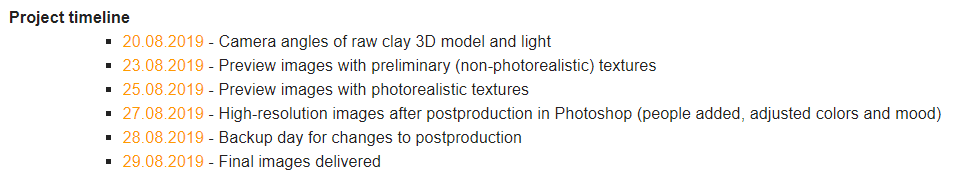
Day 1: Project timeline
Having reviewed all the input materials and aligned on the essential aspects of the work with you, we are able to share a detailed plan of the project.
Days 2-4: Building the model
We now get down to laying the foundations of our work.
We either create a whole new model based on floor plans and elevations in the .DWG format or refine the 3D building model provided by you. In this case we need to create a model of both the building and its environment by ourselves according to your inputs.
Whether it’s interiors or exteriors, we also need to find the right 3D models for those elements of the scene that may be available on the web, e.g., specific types of plants or models of furniture.
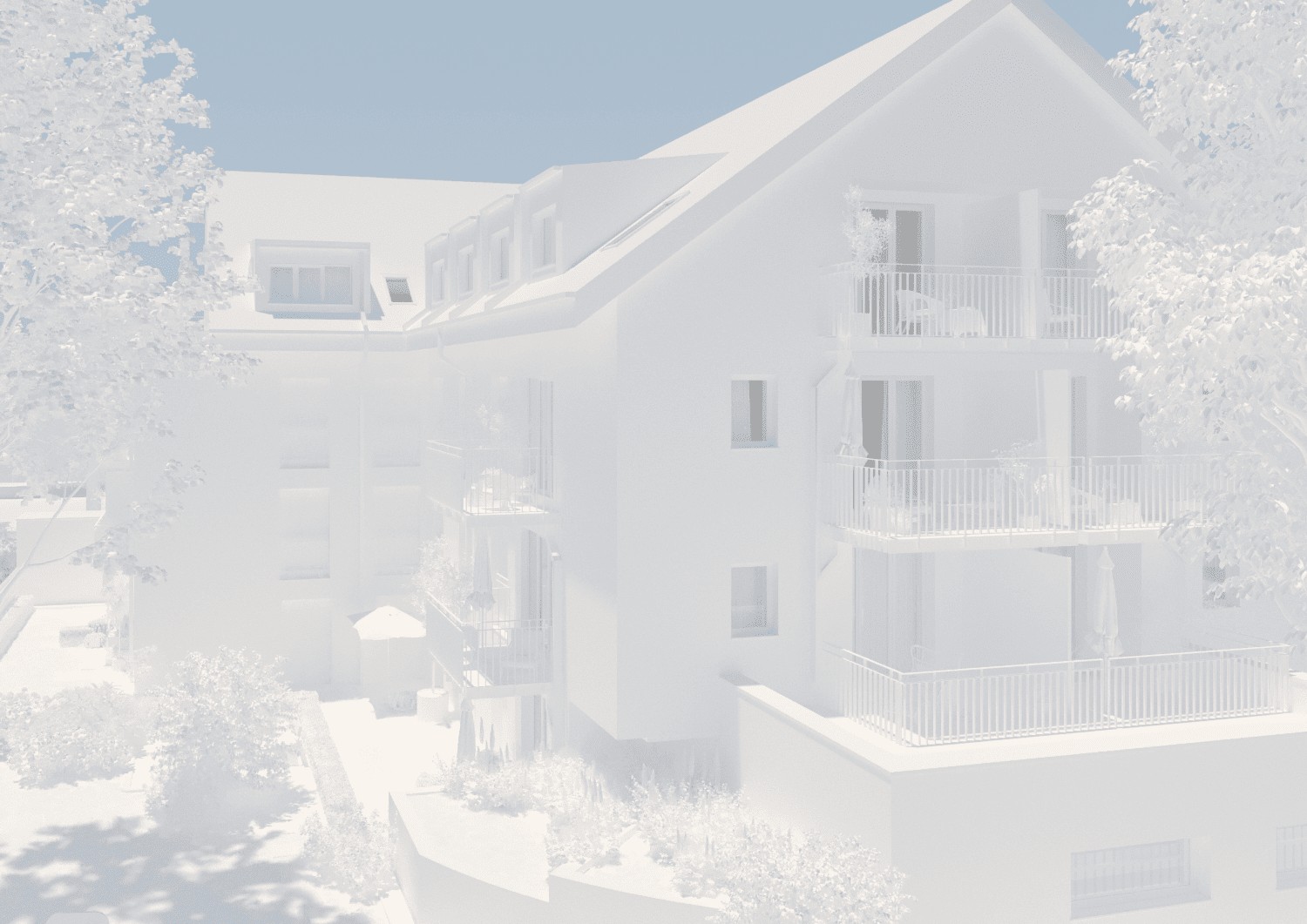
Day 5: Let there be light!
We know that these images will have a single purpose – they will be the key visual element of a new website promoting a housing project near Munich.
Knowing our audience are families looking for a pleasant, quiet environment, we opt for a bright, sunny evening for our scenes.
With a detailed model and light done, we are ready to share our first preview images. Click send!
Days 5-7: Preliminary textures
Thanks for the comments!
Being a best practice client that you are, you had time reserved to provide your comments right after receiving the previews according with the schedule.
Everything was alright with the model but you would like to have a few benches added in the garden. No worries!
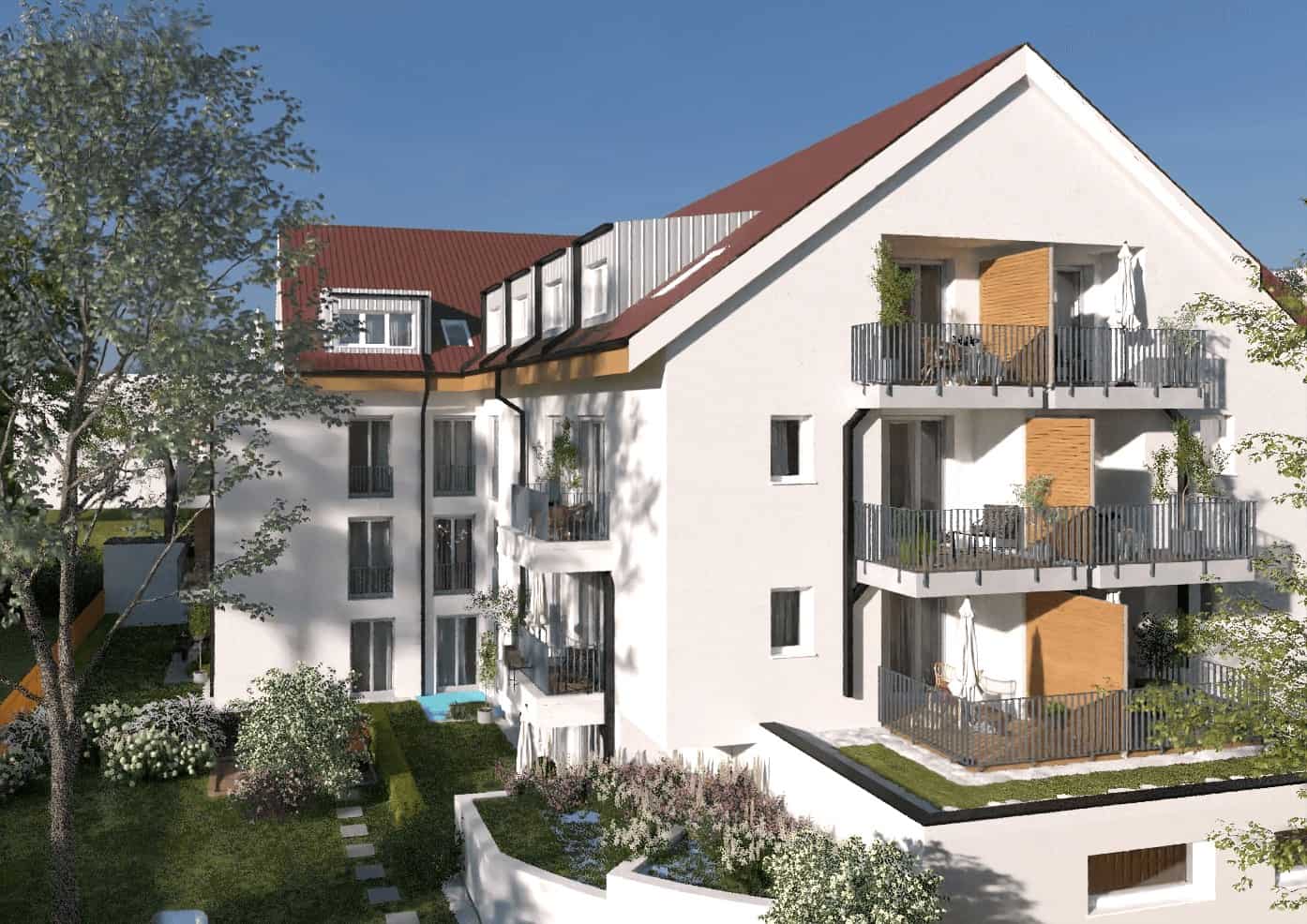
Now we are ready to add first, preliminary textures in order to confirm that all materials (like bricks or wooden furnishings) are the correct type and color and placed in the right places.
The images are still ugly ducklings by now, but that’s all we need to get things signed off before the fun part begins – creating photorealistic textures. Click send on those previews!
Days 7-11: Photorealistic magic!
The preliminary textures turned out to be spot on. Now it’s time for a tour de force of the 3D prowess of our team. We added more depth to your images, recreating textures from photographs in high detail. All the building materials are correct and ready to render.
Day 11: Rendering
It’s 7pm on a Wednesday and it’s time to let the machines do the work. We create a queue of images to be produced overnight and let our powerful hardware take care of the rest. By the time we get back to work tomorrow morning, there should be a batch of freshly baked visualizations waiting for us.
Days 11-12: Postproduction
In the last phase of work another artist on our team takes over with his Photoshop magic. More clouds are added and the composition is completed by people and more trees. The images now look alive and with correct depth.
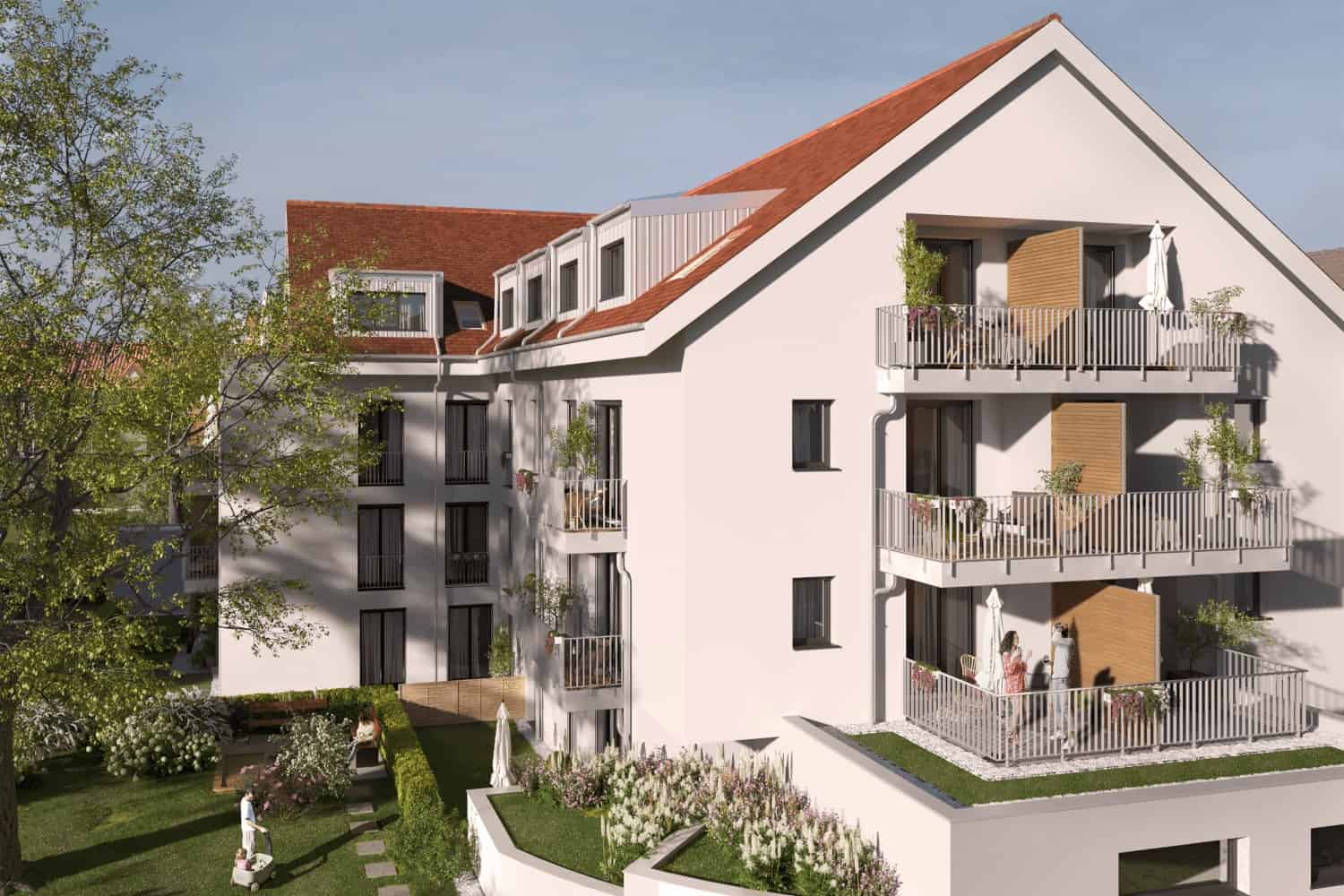
It’s been a busy and productive 12 days and we have the results that we’re proud to share with you. We load 1.2 GB of TIF, JPG and PNG files to Wetransfer and ship them to you. Till the next time!
Artykuł How high-end architecture renderings are made (Case Study) pochodzi z serwisu Pretty Pictures.
]]>Artykuł How to get best results from outsourcing architecture renderings. 6 golden rules pochodzi z serwisu Pretty Pictures.
]]>While there is no shortage of talented artists out there, many companies have limited experience with outsourcing visualization work. With them in mind we have created a list of top tips to get the best results out of the process.
- Specify your target audience
Architectural renderings can come in a variety of flavors. They can be atmospheric and quirky:

Source: www.prettypx.com
They can also be bright, sunny and inviting:

Source: www.prettypx.com
When requesting images to be produced, it is worth specifying their primary target audience. Are we trying to reach middle-income families with kids looking for their first suburban home? Are we going to target high-income couples looking for a modern, prestigious apartment?
Each target group calls for a different approach in creating renderings – starting with the light and camera angles through subtle details of furniture and greenery in the scene.
Knowing this up front will allow your rendering artist to suggest a tailored approach.
2. Understand the basics of creating renderings
Not everyone needs to know the ins and outs of how architectural visualizations are created. It pays, however, to know the basics in order to efficiently navigate and manage the process.
For instance, changing a small detail of the 3D model (say, a flowerpot) at the stage when the image has already been textured and rendered, may seem like a quick fix. In reality, it means redoing a vast amount of work from scratch and rendering the image again, which is also time-consuming.
If you’d like a step-by-step guide to how high-end renderings are created you can read a handy summary here.
3. Make sure there is a clear process to follow
Rendering companies have different approaches and workflows, and in some cases there may not be a whole lot of structure at all.
Before starting a project with a new company make sure that their way of working matches your needs.
For example, you may be thinking you’re getting a good price and quick time to deliver. It may turn out, however, that there is no opportunity (or time) reserved to make changes to the images or that the end result is not what you expected.
Best practice approach is to align on a schedule with key milestones at the beginning of the project.
4. Close your design and collect references before the project
The number one source of stress in architectural visualization projects are changes to building design happening late in the process of creating images. They often mean that days of work go to waste and many processes have to be started from the beginning. This can significantly raise the cost of your project as most rendering companies and artists operate with a limited number of free changes to the design.
In some cases changing the project is hard to avoid. For instance, architectural competitions happening with very short and strict deadlines are at times a trial and error process where architects and 3D artists work hand-in-hand.
In all other cases it’s best to finalize the design ahead of the project. In addition, to expedite the process and make sure that the image has the type of elements that you intended it’s best to collect references for all items where you had a concrete vision, e.g., greenery, furniture, cars, light and overall mood.
5. Avoid micromanagement
You’ve taken a leap of faith and hired a new team to create renderings for your project. The project is a very important one and everything needs to be perfect. The deadline is approaching rapidly.
Sounds familiar?
Most architecture and real estate marketing professionals have been in this situation at some point. If they haven’t, they sure as hell will.
Creating images of your project with a fixed deadline can be stressful even if you’re working with a known team. Being a perfectionist, you want to do everything in your power to make things just right.
While we totally get what you’re feeling, trying to control every single detail of a 3D artists’ work is a trap that can derail your project. In addition to halting the workflow and using up a lot of time for minute details, it can also reduce the clarity of the vision for the end product.
If you’re working with an experienced artist you should be able to trust their instincts and have confidence in their ability to see ahead to the end result.
6. Leave some room for out of the box thinking
Let’s not kid ourselves – in a lot of cases when you’re trying to sell real estate to investors or prospective customers, the most attractive way to do it is to present the building in happy, sunny weather.
However, as with most things, people get used to seeing the same approach applied everywhere. Things get boring after a while.
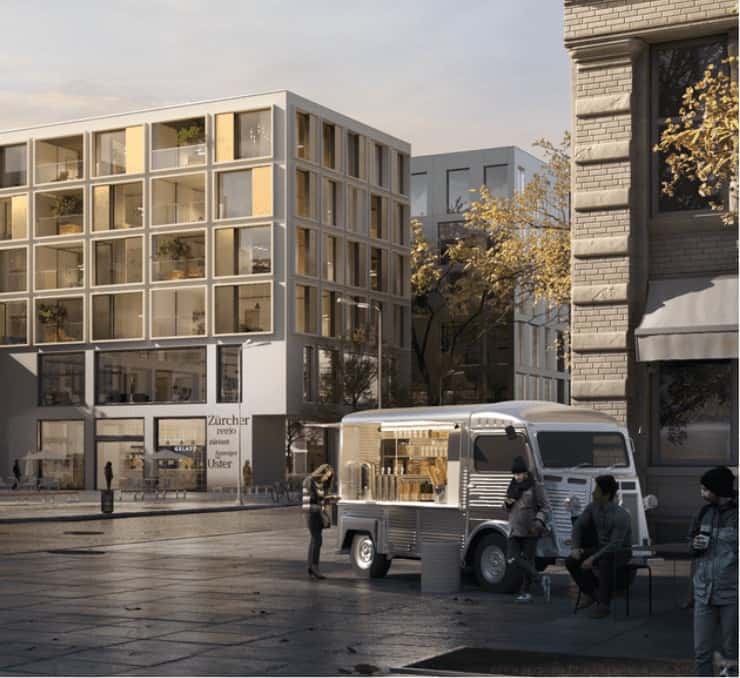
Perhaps your next project is the right time to experiment with the mood or overall approach? There are a lot of things that can be done to make your project stand out and attract attention. You could show it in the rain, or a blizzard. You could replace your usual Tesla in the scene with a cool vintage car.
You could show your building in an epic (if not slightly apocalyptic) setting:

Source: www.prettypx.com
Or set the scene in a not-so-distant future:

Source: www.prettypx.com
Sky’s the limit when it comes to creative ideas that can add a creative spark to presenting your design.
If you’d like some more ideas on how to make your project stand out you can check out our 6 tips on making your architectural renderings unique.
Artykuł How to get best results from outsourcing architecture renderings. 6 golden rules pochodzi z serwisu Pretty Pictures.
]]>Artykuł Stand out from the crowd: 4 tips for making your architectural renderings unique pochodzi z serwisu Pretty Pictures.
]]>Moreover, the vast majority of projects are illustrated using the same kinds of scenes: strong summer sun, some birds in the sky, lots of kids playing – you know the deal.
The ever-lasting need to stand out in the more advanced and demanding part of the market calls for new approaches to presenting projects. We have gathered a few ideas that can help you suggest a more creative approach to your 3D artists (they will love it!).
- Details
You can be fairly certain that most target viewers of your visualizations will spend more than a few seconds studying them (especially if the images are good). Polished details and nuances build the atmosphere and make a project memorable.
Source: www.prettypx.com
- Storytelling
Each architectural story can be told in different ways, and no two stories are ever the same. Every narrative consists of events that are tied together into a story plot. In terms of architecture, these events are the architectural elements, such as the intended use of a building, its shape or its concept.
However, more literal stories can be told in images. They don’t always need to relate directly to the building. Even if they don’t, people will remember both the image and the project much better. We are a storytelling species. The more capable a 3D artist is of telling their story in a compelling way, the more successful their images will be in the eyes of the audience.

Source: www.prettypx.com
- Non-standard weather and/or time of day
Different weather conditions play a large role in setting the mood of the image. A cool thing about 3D rendering is that you can present an exterior in every season, at any time of day, under all weather patterns there are. Perhaps your next project is the right time to experiment with the mood of your visualizations. There are a lot of things that can be done in terms of weather to make your project stand out and attract attention. Those usually involve going beyond the standard summer sun.

Source: www.prettypx.com
- Futuristic elements
If your project has a long time horizon to completion an interesting option might be to try and imagine what the world will be like when its final phases are finished.

Source: www.prettypx.com
- Bonus: Vintage cars!

Source: www.prettypx.com
This is by no means a definitive list but more of an inspiration for thinking creatively about visualizations of architecture.
We encourage you to brainstorm with your design team or rendering artists.
Artykuł Stand out from the crowd: 4 tips for making your architectural renderings unique pochodzi z serwisu Pretty Pictures.
]]>